Kim Dae-jung
South Korean president and Nobel Peace Prize laureate.

Kim Dae-jung was a South Korean politician, activist, and statesman who served as the eighth president of South Korea from 1998 to 2003. He was the first opposition candidate to win the presidency and, at his inauguration at age 74, the oldest president in Korean history. He was awarded the 2000 Nobel Peace Prize for his work for democracy and human rights in South Korea and East Asia, and for peace and reconciliation with North Korea and Japan.
- born
- 8 January 1924 (registered birth date later changed to 3 December 1925)
- died
- 18 August 2009
- nationality
- South Korean
- known_for
- Sunshine Policy, first inter-Korean summit, Nobel Peace Prize 2000
Verified Timeline
Lore & Background
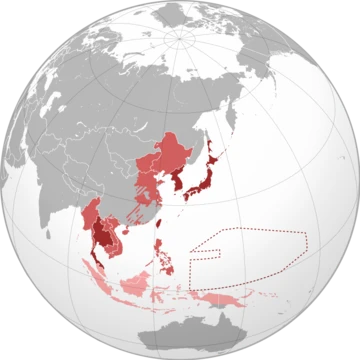
Kim Dae-jung was born on 8 January 1924 on the island of Hauido, Sinan County, Zenranan Province, Korea, Empire of Japan (now South Jeolla Province, South Korea). He was the second of seven children. His father, Kim Un-sik, was a farmer and village official resistant to Japanese rule. Kim attended Mokpo Commercial School, where he showed a talent for debate and was dismissed as class monitor for writing an article condemning Japanese colonial rule. He was forced to change his name to Toyota Taichū under the sōshi-kaimei ordinance. After graduating early in 1943 due to the war, his dream of going to university was shattered.
Reader's Guide
Kim Dae-jung originally worked as an entrepreneur, managing a shipping company and becoming president of the Mokpo Daily. After the Korean War, he entered politics as a member of the new wing of the Democratic Party. He was a leading opposition figure against military dictatorships from the Third Republic through the Fifth Republic, surviving five attempts on his life, spending six years in prison and ten years under house arrest or in exile. He ran unsuccessfully for president in 1971, 1987, and 1992, finally winning in 1997 through an alliance with Kim Jong-pil and the Democratic Liberal Party. As president, he revived the economy after the 1997 Asian financial crisis, promoted the Sunshine Policy of détente toward North Korea, and held the first inter-Korean summit in June 2000. He coordinated relations with the United States, Japan, China, and Russia, enhancing South Korea's international standing. He was sometimes called 'the Nelson Mandela of Asia.'
Did You Know?
- Kim Dae-jung's father changed his registered birth date from 8 January 1924 to 3 December 1925 to exempt him from conscription during Japanese colonial rule.
- He was the first South Korean to be awarded a Nobel Prize; as of 2024, only one other South Korean, Han Kang, has received one (for Literature in 2024).
- Kim survived five attempts on his life, spent six years in prison, and ten years under house arrest or in exile.
- He was the first opposition candidate to win the South Korean presidency, defeating Lee Hoi-chang in the 1997 election.
- At his inauguration in 1998, he was 74 years old, making him the oldest president in Korean history.
Roots on a Colonized Island
Kim Dae-jung entered the world on 8 January 1924 on Hauido, a small island 34 kilometers from Mokpo, in what was then the Empire of Japan's Korean territory. His father, a farmer and village official who quietly resisted Japanese rule, later altered the boy's registered birth date to 3 December 1925 so the child would not be conscripted. The island itself had been sold to a Japanese man named Tokuda Hiroshichi, turning its farming community into tenant laborers and triggering the Hauido Farmers Movement. Young Kim absorbed political consciousness early, reading political reports in the newspaper at eight or nine years old. When no formal primary school existed on the island, his father sent him to a private school; the family eventually sold their ancestral land to relocate to Mokpo so he could continue his education. At Mokpo Commercial School, his gift for debate and public speaking emerged, yet he was stripped of his class-monitor role for writing an article denouncing colonial rule. The sōshi-kaimei ordinance forced him to answer to the Japanese name Toyota Taichū, a humiliation that deepened his resolve. The Pacific War truncated his studies and dashed his dream of university.
A Decade of Persecution and Unyielding Opposition
After the Korean War ended, Kim left behind his early career as an entrepreneur and threw himself into the new wing of the Democratic Party, launching a lifelong campaign against authoritarian rule. From the Third Republic of the 1960s through the Fifth Republic of the 1980s, he stood as the most prominent voice of the democratization movement, directly confronting successive military dictatorships. The cost was extraordinary: he was imprisoned for six years, confined under house arrest or sent into exile for a further ten, and survived five separate attempts on his life, including a near-fatal vehicular homicide. At one point the military and political authorities sentenced him to death. Despite these repeated assaults, he persisted in seeking the highest office, running for president in 1971, 1987, and 1992 without success. Each defeat and each prison cell only sharpened his public profile and cemented his reputation as a man who would not be silenced by state power.
Breaking the Ruling-Party Monopoly
In the fifteenth presidential election of 1997, Kim Dae-jung achieved what no opposition figure had managed before: he defeated Grand National Party candidate Lee Hoi-chang, largely through a strategic alliance with Kim Jong-pil and the Democratic Liberal Party. Taking office in 1998 at the age of 74, he became the oldest president in the nation's history and the first to come from the opposition. His first challenge was economic: the 1997 Asian financial crisis had battered South Korea's economy, and Kim presided over a sweeping restructuring that included the privatization of enterprises and a transformation of the country's industrial structure. On the diplomatic front, he introduced the Sunshine Policy, a framework of détente toward the North. In June 2000, he traveled to Pyongyang for the first inter-Korean summit, meeting North Korean leader Kim Jong Il face to face. Throughout his term he also worked to coordinate South Korea's relationships with the United States, Japan, China, and Russia, strengthening the peninsula's stability while elevating the country's international status and prestige.
Nobel Recognition and a Lasting Legacy
In December 2000, the Nobel Committee awarded Kim Dae-jung the Peace Prize, recognizing his decades of work for democracy and human rights in South Korea and across East Asia, as well as his efforts toward peace and reconciliation with both North Korea and Japan. He became the first South Korean ever to receive a Nobel Prize, a distinction that, as of 2024, only one other Korean, novelist Han Kang (awarded in 2024 for Literature), has shared. The international press and public often called him the Nelson Mandela of Asia, a comparison that captured the arc of a man who endured imprisonment, exile, and death sentences before ultimately guiding his nation. Kim Dae-jung passed away on 18 August 2009, but the institutions and diplomatic frameworks he championed—the Sunshine Policy's spirit of engagement, the reformed economic structures, and the precedent of inter-Korean dialogue—continued to shape the peninsula's trajectory.
More in East Asian Leaders 1-20
Spotted an error? Know more?
This is a living reference — every entry is fact-audited, and reader corrections feed straight into our audit queue. Suggest an edit · See this site's audit record